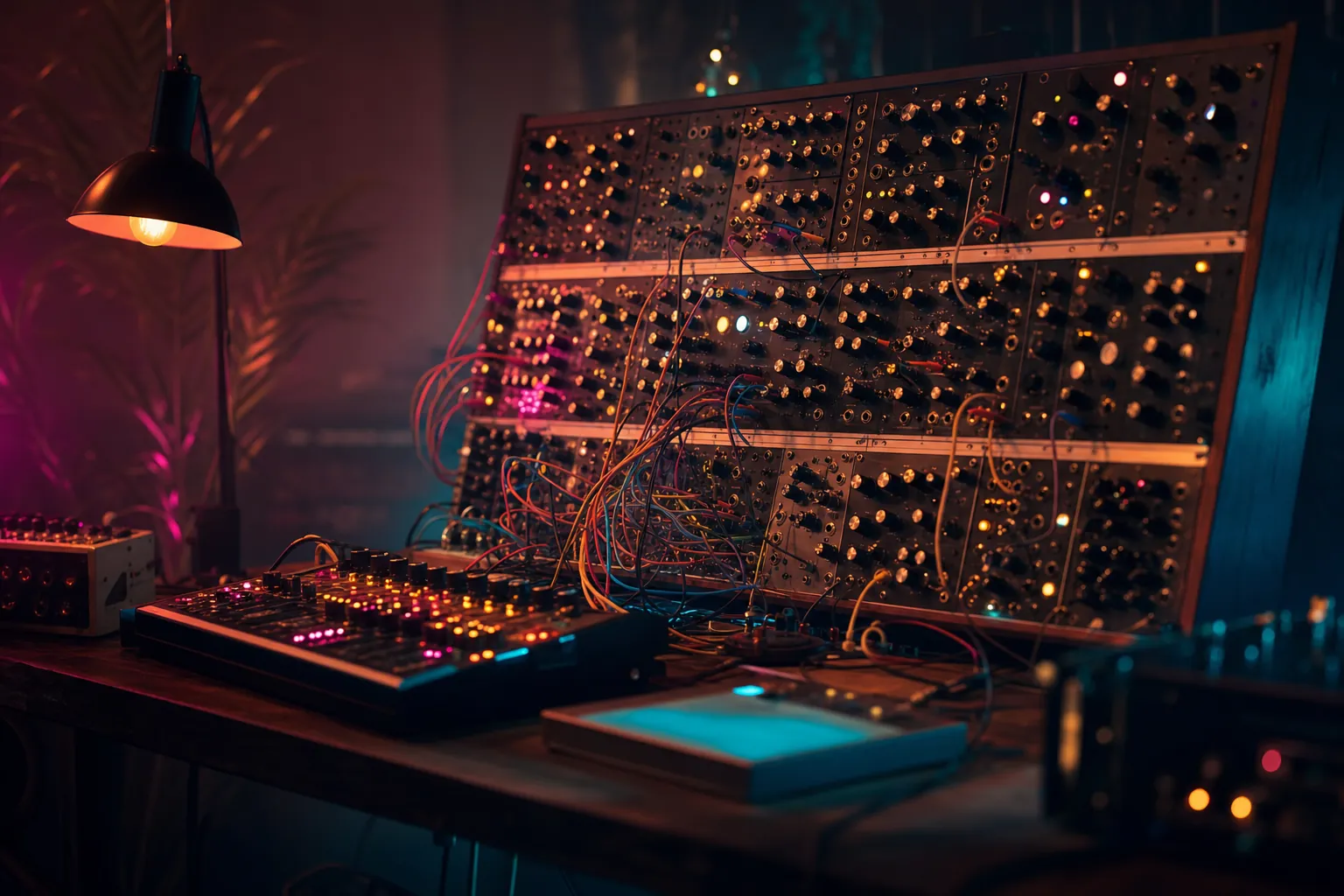
Landmark scores of the era
- 1991Monkey Island 2: LeChuck's Revenge Michael Land and Peter McConnellThe first game to use iMUSE, so themes flow into one another as the player moves.
- 2010Red Dead Redemption Bill Elm and Woody JacksonA minimalist western score inspired by 1960s westerns, built from around 200 tracks.
- 2012Journey Austin WintoryMusic responds to the player, adding harp and viola when you meet another player; first game score nominated for a visual-media Grammy.
- 2015Ori and the Blind Forest Gareth CokerAn orchestral score that won the D.I.C.E. award for original music composition.
- 2016DOOM Mick Gordon (with Richard Devine)Heavily processed synths and a nine-string guitar; won Best Music/Sound Design at The Game Awards 2016.
- 2016No Man's Sky 65daysofstatic with audio director Paul WeirRecordings by the British band are broken into parts and reassembled by a procedural music engine.
- 2017Hellblade: Senua's Sacrifice David García and Andy LaPleguaMade by Ninja Theory in Cambridge; binaural recordings of voices won the BAFTA for Audio Achievement.
- 2018God of War Bear McCrearyNordic folk instruments, an Icelandic choir and Faroese vocals in place of the series' earlier style.
The problem adaptive music solves
A film composer knows exactly how long each scene lasts. A game composer does not. One player might cross a room in ten seconds; another might stand still for ten minutes. A fight might end quickly or drag on. If the music cannot respond, it either cuts off awkwardly or loops until it becomes wallpaper.
Adaptive music, sometimes called interactive or dynamic music, tackles this by breaking a score into pieces that can be rearranged, layered or swapped while the game runs. The two main techniques are horizontal re-sequencing, choosing which section plays next, and vertical layering, fading instrument layers in and out over a continuous loop. The Layer Mixer on our home page is a small, original demonstration of vertical layering. Our explainer on adaptive music goes into both methods in detail.
The idea is old. Space Invaders sped up its loop in 1978, as described in arcade beeps. What changed from the 1990s was the arrival of systems built specifically to make such changes smooth and musical.
iMUSE: LucasArts' pit orchestra in software
At LucasArts in the early 1990s, composers Michael Land and Peter McConnell created iMUSE, the Interactive Music Streaming Engine. It was first used in Monkey Island 2: LeChuck's Revenge (1991), and the company patented it in 1994.
iMUSE worked with MIDI music, which meant the game could change instruments, jump between sections and wait for musically sensible moments to make a transition. In the town of Woodtick, for example, entering a building brings in an instrumental variation on the town theme; leaving it plays a short flourish and returns to the main tune. The developers likened it to a theatre pit orchestra following the action on stage. All later LucasArts adventure games used the system.
Middleware: FMOD, Wwise and the modern audio pipeline
Today most large games use audio middleware rather than building their own system from scratch. Two tools dominate the conversation. FMOD, from Australian company Firelight Technologies, was first released in 1995 and now includes FMOD Studio, an authoring tool for sound designers. Wwise, from Montreal-based Audiokinetic, founded in 2000, had its first commercial release in 2006. Sony Interactive Entertainment acquired Audiokinetic in 2019.
These tools let composers and sound designers define game states, such as exploring, in combat or in a menu, and decide how music should react when the game moves between them. They handle mixing, effects and, increasingly, spatial audio formats such as Dolby Atmos. Crucially, they let audio teams make changes without waiting for a programmer, which has made complex adaptive scores practical on ordinary schedules.
Not every adaptive score needs heavy tools. Rockstar's Red Dead Redemption (2010) took around 200 tracks by Bill Elm and Woody Jackson, recorded over 15 months in Los Angeles. The composers looked to 1960s westerns rather than period music, and critics described the result as minimalist and unobtrusive.
Journey, Ori and DOOM: three ways to score a moment
Austin Wintory's music for Journey (2012) responds to the player's actions and to nearby objects. When you meet another player, harp and viola join the music, so a social moment is marked musically. The score became the first game soundtrack nominated for the Grammy for Best Score Soundtrack for Visual Media, and Journey won five BAFTAs in 2013, including Original Music.
Gareth Coker's orchestral score for Ori and the Blind Forest (2015) won the D.I.C.E. award for Outstanding Achievement in Original Music Composition and Best Audio at the Golden Joystick Awards. Mick Gordon's work for id Software's DOOM (2016) went in a very different direction. He was initially asked to avoid guitars and metal, and built a sound from synthesisers, sub-bass and processed noise before guitars were allowed back in, including a nine-string guitar combined with a sample of the original game's chainsaw. It won Best Music/Sound Design at The Game Awards 2016.
Three games, three approaches: interactive orchestration, a classic orchestral score and heavy sound design. Each shows that adaptive thinking is about how music behaves as much as how it sounds.
Procedural soundtracks and the No Man's Sky experiment
Hello Games' No Man's Sky (2016) has a near-endless universe, so its music had to stretch accordingly. The British band 65daysofstatic recorded material that audio director Paul Weir's procedural engine breaks into fragments and reassembles in the game. The first soundtrack album, released in August 2016, mixed ten composed tracks with six generated by the system, and a second album of procedurally assembled music followed in 2025.
Procedural music remains a minority approach, because it is hard to make generated music feel shaped and intentional. But it points to a future in which scores can be as open-ended as the games they serve.
What adaptive scoring asks of a composer
Writing adaptive music is a different discipline from writing a fixed score. Every layer has to sound complete on its own and in combination with the others. Every section has to be able to follow, or lead into, several others. Transitions have to land at musically sensible points, usually at the end of a bar or phrase, without the player noticing a seam.
In practice, composers work closely with audio designers and programmers to agree game states and rules. A typical brief might define calm exploration, rising tension and full combat, plus a victory sting and a fail state. The composer then writes material for each state and transitions between them, and the audio team builds the logic in middleware.
Testing matters more than in linear media, because the music will be heard in many combinations the composer never listened to directly. Good adaptive scores are those where players do not notice the system at all, only that the music always seems to fit. You can experiment with the basic idea in the Layer Mixer on our home page, which uses four original synthesised layers and three states.
Surround, binaural and 3D audio: Hellblade and beyond
Adaptive design is not only about music. Ninja Theory, a studio based in Cambridge, made Hellblade: Senua's Sacrifice (2017) with binaural recordings of the voices the main character hears. Played on headphones, the voices seem to move around the listener's head. The team worked with people who hear voices to make the depiction more realistic, and the game won the BAFTA for Audio Achievement in 2018. Its score is by David García and Andy LaPlegua.
Hardware has followed. Sony's PlayStation 5, launched in November 2020, includes a Tempest 3D audio engine that can process hundreds of sound sources at once, compared with around 50 on its predecessor. Bear McCreary's score for God of War (2018), with an Icelandic choir, Faroese singer Eivør Pálsdóttir and Nordic instruments such as the nyckelharpa, shows how modern scores combine research, live performance and adaptive implementation. For the final chapter of the story, when this music leaves the game and enters the concert hall, see the concert hall.
Questions readers ask
What is adaptive music in games?
Music that changes in real time with what is happening, for example by switching sections or fading instrument layers in and out.
What was iMUSE?
An interactive music system created by Michael Land and Peter McConnell at LucasArts, first used in Monkey Island 2: LeChuck's Revenge (1991).
What are FMOD and Wwise?
Audio middleware: tools and engines that let audio teams build, mix and control interactive sound and music. FMOD dates from 1995; Wwise was first released commercially in 2006.
Why does Hellblade recommend headphones?
Its voices were recorded binaurally, which places them around the listener only when heard on headphones.
Interactive sound on
Layer Mixer
Many game scores are built in layers that play in sync, with the game turning layers up or down as the situation changes. This little loop works the same way. Pick a state and listen to the mix shift underneath you.
An original loop written for this site and generated live in your browser from oscillators and noise. No recordings, nothing borrowed from any game. Nothing plays until you press a button; start with your volume low.
Silent. Press Play or choose a state to start.
Sources we checked
- Wikipedia: IMUSE
- Wikipedia: FMOD
- Wikipedia: Audiokinetic
- Sony Interactive Entertainment: Audiokinetic acquisition (2019)
- Wikipedia: Red Dead Redemption
- Wikipedia: Journey (2012 video game)
- Wikipedia: Ori and the Blind Forest
- Wikipedia: Doom (2016 video game)
- Wikipedia: No Man's Sky
- Wikipedia: Hellblade: Senua's Sacrifice
- Wikipedia: Ninja Theory
- Wikipedia: God of War (2018 video game)
- Wikipedia: PlayStation 5
Last checked: . Spotted something out of date? Tell us.