Nobuo Uematsu
- 1987 Final Fantasy
- 1994 Final Fantasy VI
- 1995 Chrono Trigger (with Yasunori Mitsuda)
The 8-bit era · first listed work 1985
Koji Kondo was the first composer Nintendo hired specifically to write music. Within two years of joining in 1984 he had scored both Super Mario Bros. and The Legend of Zelda, and in 2023 his Super Mario Bros. theme became the first piece of video game music chosen for the US National Recording Registry.
Short, rhythmic melodies written to sit alongside sound effects and on-screen movement, often with swing, syncopation and influences from jazz-fusion and Latin music.
Kondo was born in Nagoya, Japan, in 1961. He took Yamaha music classes from kindergarten age and later studied in the Art Planning Department of the Osaka University of Arts. His published list of influences runs from progressive rock bands such as Deep Purple, Yes and Emerson, Lake & Palmer to jazz players including Herbie Hancock and Chick Corea, and the Japanese fusion group Casiopea.
He joined Nintendo in 1984. Before then, music on Nintendo games had usually been written by programmers or engineers as one part of a wider job. Kondo was hired as a dedicated composer, and his first credited work was sound for the arcade version of Punch-Out!! in 1984. He has stayed with the company ever since and now holds a senior role in its Entertainment Planning & Development division.
That long tenure matters to the story of game music. It means one person shaped the musical identity of two of the longest-running series in the medium, from the first cartridge releases through to 3D games and beyond. If you want the wider hardware context for his early work, our guide to the 8-bit era explains what the consoles of the time could and could not do.
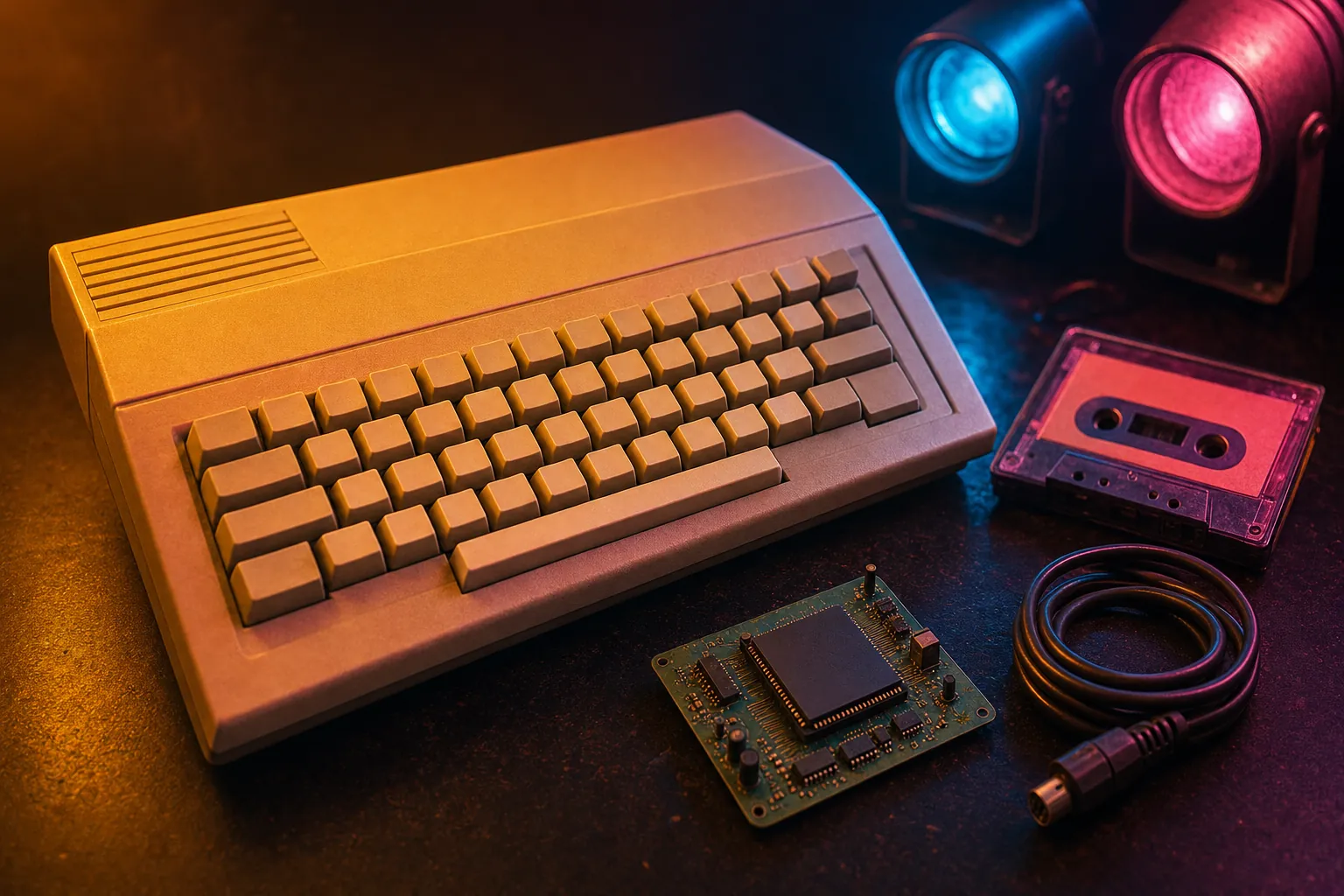
Super Mario Bros. was released in 1985, and Kondo wrote six pieces of music for it. The NES gave him five sound channels: two pulse waves, a triangle wave, a noise channel and a low-resolution sample channel. Melody, bass and percussion all had to share that small set, alongside the game's sound effects.
Accounts of the game's development describe an iterative process. Kondo would write a piece, the team would put it into the game, and if it did not match the timing of Mario running and jumping, or clashed with the sound effects, it was dropped. The overworld theme was reworked and its tempo increased as the game took shape. The finished piece sits in C major, with swing rhythm and syncopation, and draws on Latin rhythms. Those choices give a sense of bounce that matches the movement on screen.
In 2023 the US Library of Congress added the theme to its National Recording Registry, the first recording from a video game to be selected. The registry exists to preserve recordings judged culturally, historically or aesthetically significant, so the decision placed a 1985 sound-chip tune in the same list as landmark records from popular and classical music.
The Legend of Zelda followed in 1986. Where the Mario music is built around short, energetic loops, the Zelda overworld music is more heroic and march-like, written to accompany open exploration rather than a run from left to right. Kondo went on to score or co-score many later entries in the series.
The Legend of Zelda: Ocarina of Time (1998) took a different approach again. In that game the player plays short tunes on an in-game ocarina, and those tunes do things: they change the time of day, summon a horse or open the way forward. The melodies are deliberately short and memorable, because the player has to remember and perform them. It is an early, widely discussed example of music being a game mechanic rather than only an accompaniment, an idea we look at further in our explainer on leitmotifs in games.
Between those two Zelda landmarks, Kondo scored Super Mario Bros. 3 (1988), Super Mario World (1990), Yoshi's Island (1995) and Super Mario 64 (1996). Later Mario and Zelda games, including the Super Mario Galaxy series, Spirit Tracks, Skyward Sword and the Super Mario Maker titles, list him as a composer or collaborator alongside newer members of Nintendo's sound team.
Much of the formal recognition for Kondo's work arrived long after the original games. In 2014 he appeared on stage at The Game Awards in a performance with the rock band Imagine Dragons. The Library of Congress selection came in 2023, and in 2024 he was inducted into the Hall of Fame of the Academy of Interactive Arts & Sciences, an honour usually given to game designers and studio leaders rather than composers.
His themes are also regular fixtures in orchestral game-music programmes, including concerts in the UK. Our live concerts page explains how to find those events and how to check what will actually be on a programme before you book.
Last checked: . Spotted something out of date? Tell us.